
|


Rethinking the Building Envelope in a Changing Environment
February 18, 2026
As architectural performance standards continue to rise, building facades are evolving beyond static enclosures. Today’s projects increasingly demand envelopes that can adapt to environmental conditions, support occupant comfort, and contribute to long-term operational efficiency. One of the most progressive responses to these demands is the kinetic facade.
Kinetic facade systems are designed to move or adjust in response to external stimuli such as daylight, airflow, or occupancy patterns. By introducing motion as a functional design element, these systems represent a convergence of architecture, engineering, and material innovation.
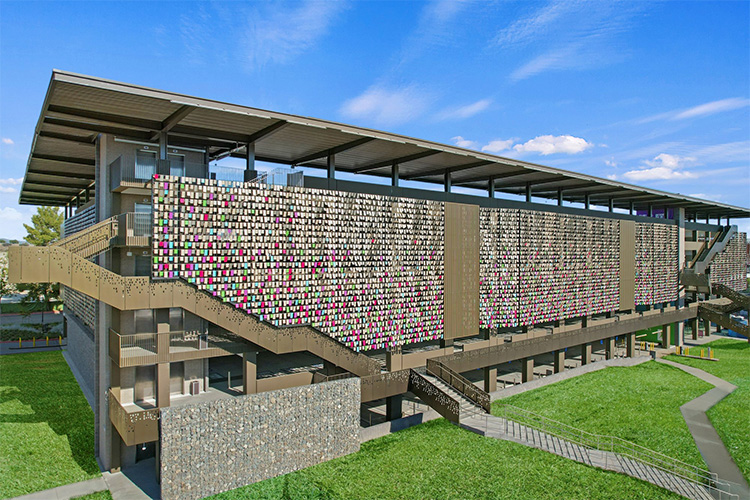
What Sets Kinetic Facades Apart
A kinetic facade is defined by its ability to change configuration over time. This movement may be automated, mechanically driven, or influenced by environmental forces. Panels and facade elements can rotate, slide, pivot, or fold, allowing the building envelope to respond dynamically throughout the day or across seasons.
Rather than serving as a fixed barrier between interior and exterior spaces, a kinetic facade acts as an active performance layer. Its primary objective is not visual novelty, but improved control over daylight, solar heat gain, ventilation, and visual comfort. By adjusting in real time, the facade can optimize conditions without placing additional strain on interior building systems.
Performance Advantages Beyond Visual Impact
While kinetic facades are often recognized for their architectural expression, their most significant benefits lie in performance. Static facade systems are inherently limited, requiring designers to balance daylight access with glare control using fixed materials or coatings. Kinetic systems overcome this limitation by allowing openness and shading to be modulated as conditions change.
Ventilation is another key area of benefit. Operable facade components can support natural or hybrid ventilation strategies, reducing dependence on mechanical systems when outdoor conditions permit. This is particularly valuable in large-volume buildings such as parking structures, where airflow and occupant comfort are ongoing challenges.
From a lifecycle perspective, well-engineered kinetic facades can also contribute to durability. By distributing movement and exposure across multiple components, certain designs may reduce localized wear compared to static systems subjected to constant stress.
Use Cases in Commercial and Industrial Projects
The application of kinetic facades is expanding beyond landmark cultural buildings into practical commercial and industrial environments. Facilities such as parking garages, transit hubs, and large commercial developments often require a balance of daylight, ventilation, security, and durability.
In parking structures, dynamic facade systems can improve airflow and light penetration while maintaining visual screening and architectural presence. In commercial settings, kinetic facades can support branding, wayfinding, and visual identity, turning the building envelope into an expressive yet functional asset.
Retrofit projects are also driving adoption. Aging buildings with underperforming facade systems can benefit from targeted kinetic upgrades that enhance daylighting and ventilation without the need for complete structural renovation.
Engineering, Materials, and Constructability
Successful kinetic facade design depends on early collaboration between architects, engineers, and facade specialists. Movement introduces additional considerations, including wind loading, water management, thermal expansion, control systems, and maintenance access. These factors must be addressed through precise detailing and system integration.
Prefabrication is a critical strategy for managing this complexity. Factory-built assemblies allow for greater quality control, predictable performance, and reduced installation time on site. For owners and contractors, this translates into improved reliability and fewer construction-phase uncertainties.
Material selection also plays a vital role. Lightweight, high-performance materials such as polycarbonate, aluminum, and advanced glazing systems support daylight diffusion while minimizing structural loads. These characteristics are especially important in kinetic applications, where smooth and reliable movement is essential.
EXTECH’s Engineered Approach to Kinetic Facades
EXTECH approaches kinetic facade design as a fully integrated building system rather than a purely aesthetic feature. Its KineticWall solutions are developed to combine movement, daylighting performance, and durability within prefabricated facade assemblies.
By leveraging polycarbonate-based systems and controlled factory fabrication, EXTECH supports projects that require precision, adaptability, and long-term reliability. This approach is particularly well suited to commercial and industrial buildings, where speed of installation, lifecycle value, and consistent performance are critical considerations.
Designing for a More Responsive Built Environment
Kinetic facades illustrate a broader shift in architecture toward buildings that actively respond to their surroundings. As performance expectations continue to evolve, dynamic facade systems offer architects and facility professionals new opportunities to align environmental responsiveness with architectural intent.
For project teams exploring how kinetic facades can enhance daylighting, ventilation, or visual identity, partnering with experienced facade specialists is essential. Engineered solutions that balance design ambition with constructability can play a key role in shaping the next generation of high-performance buildings.
Original article: Performance Benefits of Kinetic Facade Design – EXTECH
@extechinc #extechinc
Company:  EXTECH/Exterior Technologies, Inc.
Product: KINETICWALL™ Dynamic Facade
Source: https://extechinc.com/performance-benefits-kinetic-facade-design/
Tags: