
|


Lead Wool for Nuclear Reactor Shielding: CANDU Applications and Irregular Cavity Fill
June 19, 2026
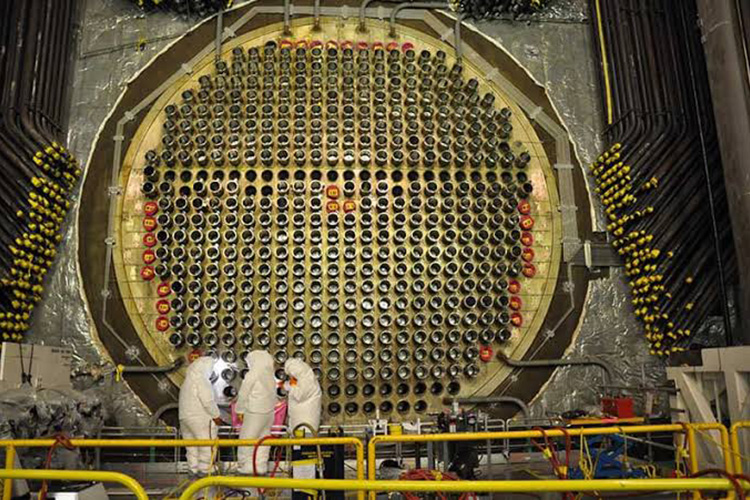
Nuclear construction and retrofit projects consistently encounter a shielding problem that flat lead products cannot always permanently solve. Cavities within reactor assemblies, irregular structural geometries, seams between shielding components, and penetrations through shielded walls all create voids that sheet lead, lead plate, and lead brick are too rigid to fill completely. Lead wool is the material used to address these conditions, and in large-scale nuclear applications such as CANDU reactor construction, it functions as a primary shielding medium rather than a secondary gap filler.
This article is written for engineers, construction managers, and facility planners involved in nuclear facility construction, retrofit shielding projects, or the specification of radiation shielding assemblies in reactor environments.
Why Rigid Lead Products Are Not Sufficient for All Nuclear Shielding Applications
Sheet lead, lead plate, and lead brick perform well in planar assemblies where shielding surfaces are flat, accessible, and regular. In nuclear reactor construction, those conditions are the exception rather than the rule.
Reactor components including pressure vessels, fuel channel assemblies, valve bodies, and structural end caps present curved surfaces, deep cavities, and complex internal geometries that rigid shielding materials cannot conform to. Attempting to fill irregular cavities with sheet lead or brick leaves voids at edges, corners, and transitions. Each void is a gap in the shielding system, and in a nuclear environment, gaps in shielding have measurable consequences for dose rates in adjacent areas.
The problem compounds at seams and joints between rigid components. Even where sheet lead covers a surface completely, the interfaces between panels, around fasteners, and at penetrations require a material that can be packed and shaped in place. Lead wool is manufactured specifically for this purpose.
What Lead Wool Is and How It Works
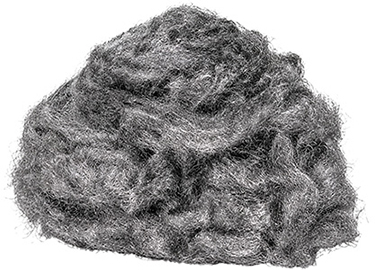
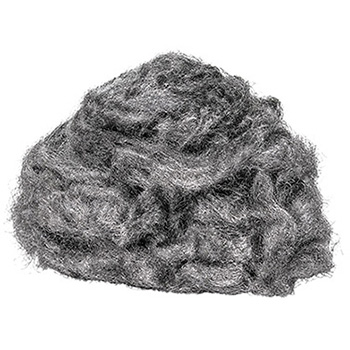
Lead wool is a flexible radiation shielding material composed of long, fine strands of chemical grade lead twisted into a 5/8-inch rope. It is certified to Federal Specification QQ-C-40 and is supplied in 5 lb waterproof bags or 50 lb cartons. As a practical reference, approximately 2.5 feet of lead wool weighs 1 lb.
Unlike sheet lead, lead wool has no fixed geometry. It can be packed, compressed, and shaped into cavities of any profile, conforming to the internal contours of a shielded assembly in a way that rigid materials cannot. Once installed, it maintains its position and provides continuous shielding coverage across the filled area.
Lead wool is not a substitute for rigid shielding components in applications where sheet lead or plate is appropriate. It is a complementary material that fills the gaps those components leave behind, and in certain large-scale nuclear applications, it serves as the primary cavity fill medium within permanent structural assemblies.
Lead Wool in CANDU Reactor Construction
The CANDU reactor is a Canadian-designed pressurised heavy water reactor that uses natural uranium fuel and heavy water as both moderator and coolant. It is one of the most significant nuclear engineering achievements in Canadian history and remains in operation across multiple generating stations in Canada and internationally.
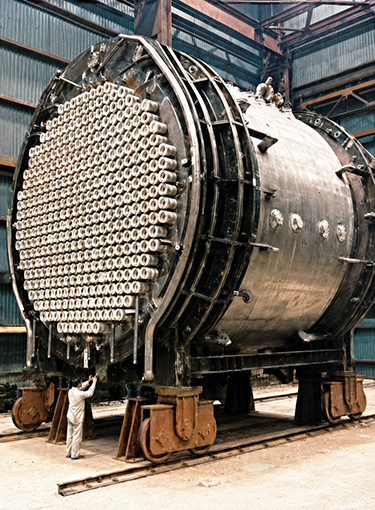
Among the largest shielding components in a CANDU reactor are the Calandria end shields. The Calandria is the cylindrical vessel at the core of the reactor that houses the heavy water moderator and the fuel channels. The end shields cap each end of the Calandria, providing both structural support for the fuel channels and radiation shielding for personnel and equipment in surrounding areas.
The internal cavities within Calandria end shield assemblies are large, complex, and geometrically irregular. These cavities must be filled with shielding material that conforms completely to the internal structure without leaving voids. Lead wool is used as the primary cavity fill material within these assemblies, providing continuous shielding coverage across the complex internal geometry of the end shields.
This is a permanent installation. The shielding material within a Calandria end shield remains in place for the operational life of the reactor, which spans decades. The material must perform reliably under sustained radiation exposure without degrading, shifting, or creating new voids over time. Lead wool meets these requirements in a way that rigid alternatives cannot, because it can be packed to fill the cavity completely at the time of installation.
Other Nuclear and Industrial Applications for Lead Wool
Beyond Calandria end shield filling, lead wool addresses shielding continuity problems throughout nuclear facility construction and operation.
Penetration Sealing in Shielded Walls
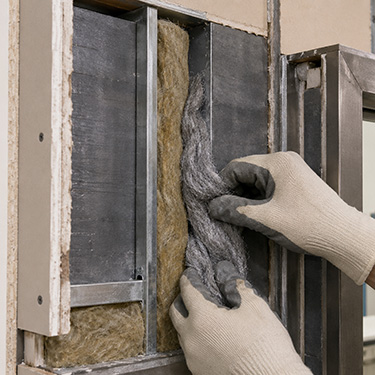
 Conduit, piping, HVAC ducts, and mechanical services that pass through shielded walls create openings that sheet lead cannot seal completely. Lead wool is packed around penetrations to restore shielding continuity at the interface between the service and the surrounding wall assembly. This is one of the most consistent applications across nuclear, medical, and industrial shielding projects.
Seam and Joint Filling in Rigid Shielding Assemblies
Where lead brick, lead plate, or pre-cast shielding blocks form the primary wall structure, joints and seams between components create discontinuities. Lead wool fills these gaps and maintains coverage at interfaces that rigid materials leave open. Left unfilled, these seams represent measurable weak points in the overall assembly.
Removable Shielding with Lead Wool Blankets
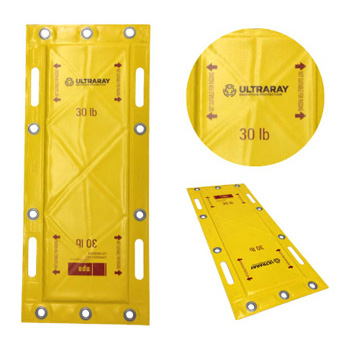
For temporary shielding requirements during maintenance outages and planned shutdowns, lead wool blankets provide a flexible, removable solution. Blankets are constructed from layered continuous lead wool rope, which reduces internal voids and improves shielding performance relative to a single loosely packed layer.
Blanket configurations available for nuclear applications include:
- PVC-covered blankets for durability and surface cleanability
- High-temperature blankets for elevated operating environments
- Curved configurations for cylindrical vessels, piping, and nozzles
- Magnet and strap attachment systems for accurate positioning and removal
Facilities deploy lead wool blankets during maintenance outages to shield specific components or areas with changing shielding requirements. Workers can remove them after the outage without damaging the underlying component.
Shielding Performance Reference
Lead wool blanket shielding performance varies by density and finished thickness. The following reference data applies to blanket configurations tested against Cobalt-60 (60Co), a gamma source commonly used as a reference standard in nuclear and industrial shielding applications.
|
Lead Wool Density (lb/sq ft) |
Approx. Finished Blanket Thickness (in) |
Lead Sheet Equivalent Thickness (in) |
% Dose Rate Reduction (60Co) |
|---|---|---|---|
|
10 |
3/8 |
1/8 |
20% |
|
12.5 |
1/2 |
5/32 |
23% |
|
15 |
5/8 |
3/16 |
26% |
|
20 |
3/4 |
1/4 |
31% |
These figures are provided as reference data for blanket configurations. Shielding requirements for specific nuclear applications should be confirmed by a qualified radiation safety officer or project physicist, as performance depends on the radiation source, energy level, geometry, and installation conditions.
Specification and Procurement Considerations for Nuclear Projects
Lead wool for nuclear applications should be specified as part of a coordinated shielding system design. The shielding design, produced in coordination with the project physicist or radiation safety officer, defines the performance requirements the lead wool must meet. Density, coverage area, installation method, and packaging format all follow from that specification.
Key considerations before procurement:
- Permanent cavity fill applications require confirmation that the lead wool density and packing method achieve continuous coverage without voids
- Temporary blanket applications require selection of the appropriate blanket configuration, attachment system, and temperature rating for the operating environment
- Large-scale projects should confirm lead times and packaging requirements early, particularly for 50 lb carton quantities needed for high-volume cavity fill work
- Material certification should be confirmed at the procurement stage; lead wool certified to Federal Specification QQ-C-40 provides a documented baseline for nuclear project quality requirements
Summary
 Lead wool fills the gap between what rigid shielding materials can achieve and what nuclear reactor construction actually requires. In CANDU reactor Calandria end shield assemblies, it serves as a permanent primary fill material within complex structural cavities. In broader nuclear facility construction, it seals penetrations, fills seams between rigid components, and provides removable blanket shielding during maintenance operations.
The governing principle is the same across all of these applications: shielding continuity depends on complete coverage, and complete coverage in irregular geometries requires a material that conforms to the space rather than approximating it.
Ultraray supplies lead wool for nuclear, industrial, and construction applications across Canada, with technical support available for cavity fill specification and blanket configuration selection.
For projects requiring lead wool or lead wool blankets, contact Ultraray to discuss material requirements, density selection, and packaging options for your application.
#Ultraray #RadiationProtection #RadiationSafety #PureLead #SheetLead #Lead
Company:  Ultraray Group Inc
Source: https://ultraray.com/blog/lead-wool-nuclear-shielding/
Tags: