
|

Lead Glass for Radiation-Shielded Viewing Windows from Ultraray Group
 Other News
Subscribe to FREE newsletter
Other News
Subscribe to FREE newsletter
| Apr 29, 2026 |
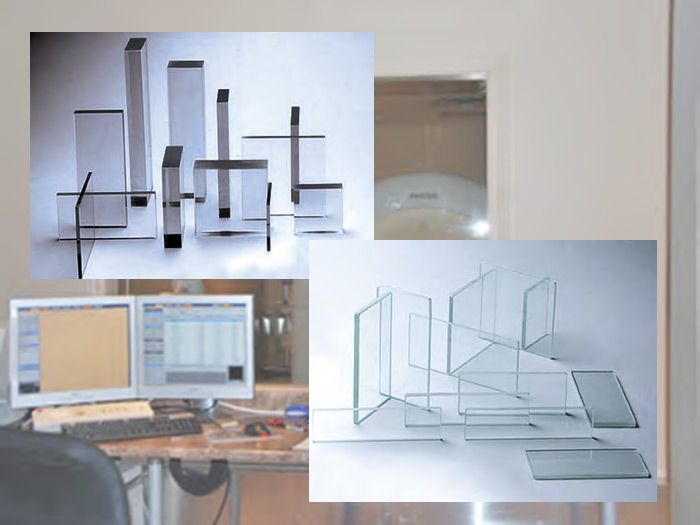
Lead glass is one of the most technically specific components in a radiation shielded construction project. It must meet calculated shielding performance requirements, maintain optical clarity over its service life, and integrate continuously with surrounding wall assemblies, frames, and adjacent penetrations. Projects that treat lead glass as a late-stage procurement item rather than a coordinated design element frequently encounter inspection failures, substitution delays, and shielding gaps at glazing transitions.
This article is written for engineers, architects, radiation safety officers, and facility planners involved in the design or procurement of shielded viewing windows in medical imaging, nuclear medicine, and industrial radiography environments.
What Is Lead Glass and How Is It Used in Radiation Shielding Systems?
Lead glass is a transparent, high-density glazing material engineered to provide radiation protection while maintaining visual observation between shielded and non-shielded spaces. It is used in controlled environments where direct line-of-sight is operationally required, such as imaging rooms, control booths, and nuclear facilities.
Typical applications include:
- Diagnostic X-ray and CT imaging rooms
- PET and nuclear medicine suites
- Industrial radiography rooms
- Nuclear power control environments
In each of these cases, the glazing must align with the shielding requirements defined by the project physicist. Incorrect selection or poor coordination between glazing, framing, and wall systems is the primary source of inspection failures, not the glass material itself.
Why Do Radiation Shielded Window Systems Commonly Fail?
Most shielded window failures originate in coordination gaps between glazing, framing, and wall systems, not in the glass performance itself. Understanding where these failures occur is the starting point for avoiding them.
- Mismatched shielding performance Specifying glass without aligning it to the wall’s shielding requirements creates a weak point at the opening. Even small discrepancies between the glass and wall performance can result in measurable radiation leakage that triggers a failed physicist inspection.
- Improper frame integration Lead glass requires lead-lined frames matched to the shielding performance of the glazing. Standard commercial window frames are not an acceptable substitute. Where frames and glass are sourced separately, confirming that the frame lining meets the required shielding performance at the wall becomes the responsibility of the project team, and that verification step is frequently missed.
- Poor interface detailing Transitions between the glass, frame, wallboard, and structural framing are a critical control point. Gaps, insufficient overlaps, and discontinuities at these interfaces compromise the entire assembly regardless of how well each individual component performs.
- Incorrect assumptions about radiation energy PET and nuclear applications involve substantially higher energy radiation than standard diagnostic X-ray rooms. Using standard glass formulations in these environments results in underperformance against the shielding design requirements.
- Failure to coordinate service penetrations Viewing windows are rarely isolated within a wall. Electrical conduit, HVAC, and control systems often pass nearby. If these interfaces are not coordinated with the shielding design, the overall continuity of the assembly is broken regardless of how well the glazing itself is specified.
What Types of Lead Glass Are Used in Different Applications?
Lead glass is not a single product category. Different radiation environments require different compositions and shielding performance levels, and substitution between product types is not appropriate without input from the project physicist.
Diagnostic X-Ray and CT Environments
For standard diagnostic imaging environments, X-ray shielding lead glass is the appropriate product class. These products are available in multiple shielding performance grades suited to diagnostic photon energy ranges and are appropriate for most hospital imaging rooms and CT suites.
PET and High-Energy Gamma Environments
PET imaging requires shielding against higher-energy gamma radiation than standard diagnostic X-ray. Positron annihilation in PET produces 511 keV gamma radiation, which exceeds what standard X-ray glass formulations are designed to address. Products designed for PET use exceed the shielding performance of standard X-ray glass and should be explicitly confirmed as rated for PET applications in the manufacturer’s technical documentation. Numerical similarity in stated shielding grades between X-ray and PET glass products does not indicate interchangeability.
Nuclear Medicine and Nuclear Power Facilities
Facilities involving nuclear medicine procedures or nuclear power applications may require ultra-high-density block glass with shielding performance substantially beyond that of medical imaging glass. Products in this category are available up to approximately 9 inches thick and are engineered for environments where radiation intensity and exposure duration are significantly higher than in clinical imaging. Lead times for high-density block glass can affect project schedules, making early engagement with the physicist and glazing supplier particularly important.
In all cases, product selection must be based on calculated shielding requirements from the project physicist, not on assumptions or standard specifications.
How Does Lead Glass Maintain Visibility While Providing Radiation Protection?
Lead glass is engineered to balance density with optical clarity, which is not a straightforward material requirement. The shielding performance of the glass depends on its lead oxide content, and higher lead content must be achieved without compromising light transmittance or introducing visual distortion.
Key optical performance characteristics to confirm at the specification stage include:
- Colour neutrality: Glass should not introduce yellow or green tint that could interfere with clinical observation or patient monitoring
- Light transmittance: Sufficient transmittance for accurate room observation must be maintained, particularly in rooms where lighting levels are controlled
- Long-term stability under radiation exposure: Some glass formulations are susceptible to discolouration after sustained radiation exposure, which degrades visibility progressively over the service life of the facility
Discolouration in lead glass is not a cosmetic issue. A viewing window that yellows within several years of installation creates operational problems for the clinical team and may require replacement before the end of the facility’s lifecycle. This characteristic is product-specific and should be confirmed with the manufacturer before specification is finalised.
What Role Do Frames and System Integration Play?
Lead glass shielding performance is only as reliable as the system it is installed into. The frame, wall interface, and adjacent components must each be addressed as part of a coordinated assembly.
Frame Systems
Lead-lined window frames must match the shielding performance of the glazing, be constructed from appropriate structural material, and maintain continuity at joints and corners. Welded and telescopic steel frame configurations are commonly used, depending on wall type and installation conditions. Frames manufactured from 16-gauge steel and lined with sheet lead matched to the glazing specification provide a verifiable, consistent assembly. When glass and frames are specified and sourced together, this coordination is built into the supply chain. When they are sourced separately, it must be explicitly verified by the project team.
Wall Interface and Transition Detailing
The interface between the glass assembly and the surrounding wall construction is where shielding continuity most frequently breaks down. This includes overlaps with lead-lined drywall or panels, sealing of perimeter joints, and alignment of the frame within the structural opening. These details must appear in the project documents and be confirmed during installation, not assumed.
Adjacent Components
Doors, ceilings, and service penetrations within the same shielded envelope must be coordinated to the same shielding strategy as the glazing. A correctly specified and installed viewing window cannot compensate for failures elsewhere in the system.
When Should Laminated Lead Glass Be Specified?
Safety lamination adds an impact-resistant interlayer to the glass assembly and is used when impact resistance or safety glazing code compliance is required. It is relevant in door lites, high-traffic viewing areas, mobile barriers, and facilities with specific safety glazing requirements.
Lamination introduces additional considerations that should be addressed at the specification stage rather than discovered during procurement. These include increased weight relative to standard glass, handling and installation complexity, and the need to confirm that frame tolerances accommodate the laminated assembly dimensions. Laminated lead glass should be specified based on project conditions and applicable code requirements, not applied as a default.
What Construction and Logistics Factors Affect Lead Glass Projects?
Beyond technical performance, lead glass must integrate into real construction workflows and procurement timelines.
Custom sizing is available and commonly required for retrofit projects where existing wall openings do not correspond to standard glazing dimensions, or where architectural sightline requirements fall outside standard product ranges.
Lead glass is dense and brittle. Improperly packaged glass is vulnerable to damage during transit, which can result in schedule delays and replacement costs. Professional crating suited to the glass dimensions and weight should be confirmed with the supplier before the order is placed, particularly for large-format or high-density products.
Installation sequencing must be coordinated with frame placement, wall finishing, and inspection schedules. Late-stage installation errors in shielded assemblies are difficult to correct without significant rework, because the surrounding wall construction is typically complete before glazing is installed.
Key Coordination Requirements Before Procurement
Lead glass procurement should not proceed without the following confirmed:
- The shielding specification from the project physicist, including the required shielding performance for the glazed opening and the radiation type and energy in the space
- The frame specification, confirming that the frame shielding performance matches the glazing and the surrounding wall assembly
- The wall assembly design, confirming that transitions between frame, glass, and wall construction are continuous
- Any applicable safety glazing or building code requirements for the installation location
- Lead time for the specified product, particularly for custom sizes, high-density block glass, or laminated assemblies
Proceeding without any one of these confirmed introduces risk of either an incorrect product selection or a shielding gap that requires corrective work after the physicist’s inspection.
Summary
A radiation shielded viewing window is not a single product. It is a system interface that must perform consistently with every surrounding component. Lead glass selection must be driven by the shielding design, frame integration must be confirmed against the glazing specification, and wall transitions must be detailed and verified during installation.
The appropriate glass type varies by application: standard shielding glass for diagnostic X-ray and CT, higher-performance formulations for PET environments, and ultra-high-density block glass for nuclear medicine and nuclear power installations. Optical performance, long-term stability, and safety glazing requirements are specification inputs alongside shielding performance, not secondary considerations.
Ultraray supplies lead glass across all of these applications, along with matched frame systems and technical support for project coordination. Specification assistance is available for projects at the design stage.
#Ultraray #RadiationProtection #RadiationSafety #PureLead #SheetLead #Lead

For other relevant searches, you might want to try: